Our War Widows ... Our National Shame

All Australians should be ashamed of our Government’s appalling treatment of the families of those members of our defence forces who die on active service.


The latest example is the unforgivable treatment of the widow of Sgt Brett Till. Six months ago Sgt Till was killed while trying to disarm a roadside bomb in Afghanistan.  Just two weeks later, his widow, Breeanna, pregnant with the couple’s third child, found that her late husband’s weekly wage dropped from $905 to $305.


This places her on the same level of financial support as a single mother on welfare. This is simply unacceptable. 


Any Australian who places his life on the line for our nation should do so knowing that, should the worst happen, his family would be financially secure for life.


Our politicians are always there for the photo opportunity when our Defence Forces leave for an overseas deployment.  They line up for the on-site photo tour with their borrowed flak jackets and helmets. They mouth their “profound sympathy” condolences when tragedy strikes … then they turn their eyes away.


Even their senior comrades in the military must do more to change a deeply flawed system. The Chief of the Defence Force, Air Chief Marshal Angus Houston was quoted as saying: “To the family, I say that our thoughts and prayers – my thoughts and prayers – are with you. I’ll ensure you’re supported through your time of grief.”


Breeanna Till and the growing list of widows like her cannot live on thoughts and prayers. Their families have made terrible personal sacrifices for our nation. They are not statistics. They are real people. They have real needs: housing; living expenses; education costs.


The time has come for our government to accept its sacred duty and ensure that this system is changed and changed urgently. If necessary, our military commanders should take the initiative and publicly advocate the change, shaming the government into action if necessary.
 

RESOLUTION NEAR AT FROMELLES

The descendants of the Missing soldiers of Fromelles are tantalisingly close to the resolution that has eluded them for 93 years.  We must not fail them now in honouring the missing by identifying them and giving them an individual, named grave.

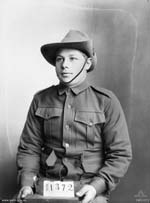
HARRY WILLIS web.jpg

And it seems a pity that artificial deadlines will mean that the vast majority of the missing will be buried before they are identified, thus depriving their descendants of the chance to be present when they are interred in the new cemetery now being constructed across the road from the Fromelles Church.

Thanks to the unceasing work of Lambis Englezos and his supporters, around 250 individual remains have now been exhumed from the mass grave at Pheasant Wood, just below the village of Fromelles, where the Germans buried them after the Battle of Fromelles on July 19 1916. 

I say this because it should not be forgotten that were it not for Lambis and his team’s dogged determination, the missing would still be languishing, unrecognised, in Flanders mud.  Almost to a man, the authorities denied Lambis’ claims every step of the way – the same authorities which denied Lambis a meaningful role in the recovery process.

The current plan is that all the remains will be buried in the new cemetery on the anniversary of the battle next year – whether they have been identified or not.  Those identified will be buried under an individual tombstone; those unidentified will be buried in an ‘unknown soldier’ grave, which will be changed to their name later should they be subsequently identified.

Last June, a British forensics firms was awarded a five-year contract to try to identify the missing soldiers.  That means the process will continue through to 2014.  Is it not possible to wait until remains are identified before burial so descendants can be present at that sacred ceremony.

For descendants like Tim Whitford, whose great uncle Harry Willis almost certainly lies amongst the Pheasant Wood missing, it has been a long and painful journey.  Tim, a former Australian soldier himself, has played a leading role with Lambis Englezos in his quest to first discover the final resting place of the missing and then to identify them.

Harry Willis was a 20-year-old private from Gippsland who died in the disastrous attack that saw almost 2000 Australians killed and another 3500 wounded, missing or taken prisoner.  Harry’s family, along with those of hundreds of his mates, have lived for almost a century without any knowledge of his final resting place. 

Now we are so close to finding Harry Willis and his mates, surely we can grant them the honour of an individual funeral.